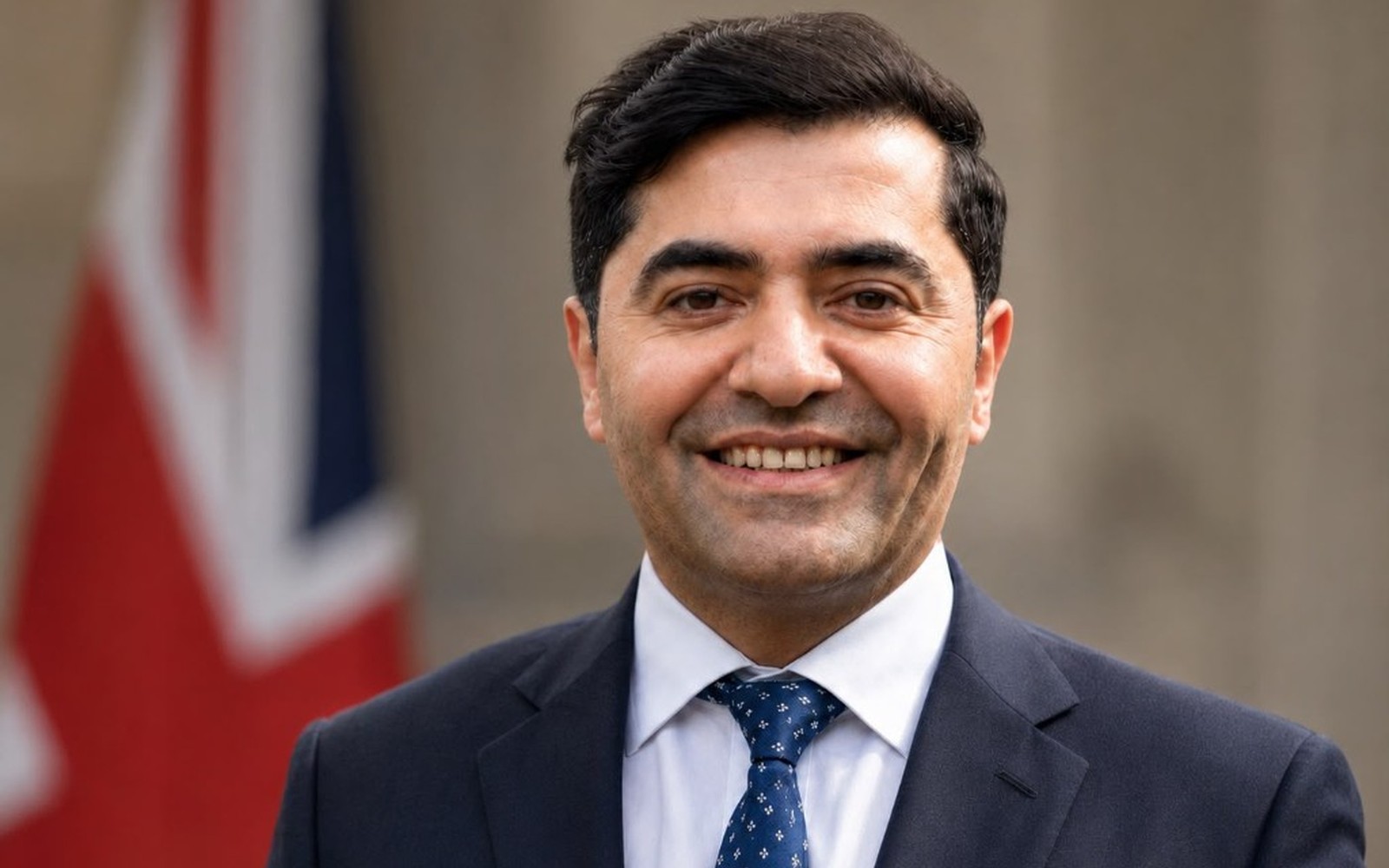
Labour MP John McDonnell has warned that the growing use of artificial intelligence and autonomous systems in warfare must not be allowed to remove human judgement from decisions over life and death.

His intervention follows Prime Minister Andy Burnham's announcement of a new UK-US AI and Autonomy defence partnership, intended to accelerate cooperation on military AI, autonomous systems and protection of critical national infrastructure.
McDonnell said:
"Military AI & autonomous weapons risk taking decisions away from trained personnel enabling algorithms and Big Tech to determine civilian life or death."
He added:
"Machines should never be allowed to decide to kill. The PM should back the UN process to control killer robots."
UK and US expanding defence AI cooperation
Burnham announced the new partnership at the UN General Assembly in New York.
The agreement will bring together the UK Ministry of Defence's Rapid AI Delivery Taskforce and its US counterpart to develop what the Government describes as "trusted, interoperable" AI and autonomous capabilities.
The Government says the technology could help protect critical infrastructure, including sea lanes and airspace, improve threat detection and strengthen deterrence.
The partnership builds on existing AUKUS cooperation and comes as the UK military expands its experimentation with autonomous systems, including drone swarms and uncrewed underwater platforms.
Government says fully autonomous weapons are 'not acceptable'
The UK's stated defence policy draws an important distinction between AI-assisted weapons and systems able to select and attack targets without appropriate human involvement.
Official Ministry of Defence policy says:
"The United Kingdom does not possess fully autonomous weapon systems and has no intention of developing them."
The Government says weapons involving AI must operate lawfully and ethically and that systems capable of selecting and attacking targets without context-appropriate human involvement would be unacceptable.
McDonnell wants stronger international rules
McDonnell is calling for that principle to be reinforced through international law and multilateral agreement.
The main UN forum examining lethal autonomous weapons is the Convention on Certain Conventional Weapons, where governments have been discussing possible international rules through a Group of Governmental Experts.
Britain already says that process remains central to its efforts to establish international norms and standards governing lethal autonomous weapons.
However, countries have yet to agree a comprehensive international treaty defining and regulating autonomous weapon systems.
Military AI advancing rapidly
The debate has become more urgent as technology developed during the war in Ukraine has demonstrated how quickly autonomous and AI-assisted military systems can evolve.
Britain recently conducted a significant drone-swarm trial in which multiple autonomous aircraft were coordinated in a realistic military environment, part of wider work with allies on next-generation battlefield technology.
The Government argues that such systems can protect troops, improve surveillance and strengthen deterrence while maintaining proper human control.
McDonnell's concern is that technological development could move faster than legal and ethical safeguards.
Debate is about where humans remain in control
The disagreement is therefore not simply about whether the Armed Forces should use AI.
The Government supports military AI while maintaining that meaningful human involvement must remain in decisions involving lethal force. McDonnell is pressing for stronger international controls to guarantee that principle as autonomous technology becomes more capable.
His intervention puts a central question at the heart of Britain's emerging defence AI policy: how far autonomy should be allowed to go, and what legal safeguards are needed to ensure that machines never become the ultimate decision-maker over human life.