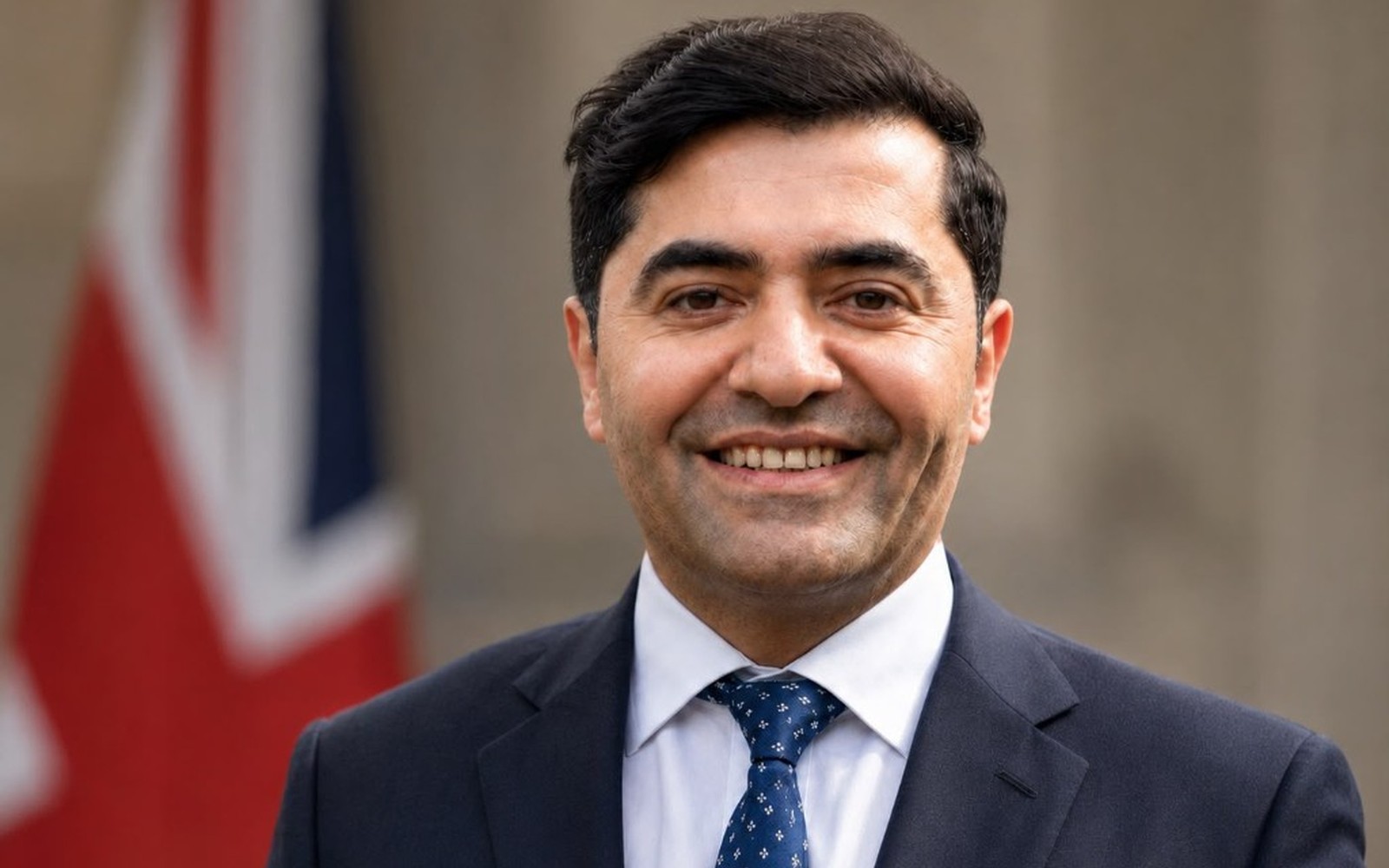
Labour MP Ian Byrne has demanded a full public apology from the UK Football Policing Unit after it referred to the Taylor Report and post-Hillsborough safety reforms while opposing proposals to relax restrictions on drinking alcohol in sight of the pitch.

The Liverpool West Derby MP, who is a Hillsborough survivor and parliamentary lead for the Hillsborough Law campaign, described the reference as "factually inaccurate, deeply insensitive and wholly inappropriate".
Byrne wrote to the UK Football Policing Unit and the National Police Chiefs' Council after Prime Minister Andy Burnham called for the rules on drinking alcohol at football matches to be reconsidered.
He said:
"Alcohol did not cause Hillsborough. The behaviour of supporters did not cause or contribute to the disaster."
That position is supported by the 2016 Hillsborough inquests, which found that those who died were unlawfully killed and that supporter behaviour did not cause or contribute to the dangerous situation at the Leppings Lane turnstiles.
Row follows Burnham call to review alcohol rules
Burnham has argued that the current rules are outdated and discriminate against football supporters compared with spectators at other sports.
The Sporting Events (Control of Alcohol etc.) Act 1985 prohibits drinking alcohol in view of the pitch at matches in the top five tiers of men's football in England and Wales.
Responding to Burnham, the UK Football Policing Unit warned against changing the rules without consultation and referred to legislative changes and recommendations introduced after football-related tragedies, including the Taylor Report.
That wording prompted criticism from Liverpool supporters, campaigners and MPs.
UKFPU says it did not intend to link alcohol with Hillsborough
Following the backlash, the policing unit said it had not intended to suggest alcohol caused the Hillsborough disaster.
A spokesperson said:
"It was not our intention to link the issue of alcohol with the Hillsborough tragedy."
The unit said it had been referring to the range of measures introduced to improve safety in football grounds.
Byrne said that clarification did not go far enough.
In his letter, he argued that invoking Hillsborough in a debate about alcohol risked reviving discredited claims used for years to blame Liverpool supporters.
Independent investigations rejected alcohol claims
The Independent Office for Police Conduct has said there was no evidence that alcohol consumption was a factor in causing the disaster.
Its Hillsborough investigation notes that claims about excessive drinking were rejected by the Taylor Interim Report and that subsequent investigations, including the Goldring inquests, found no evidence that supporter behaviour or alcohol caused or contributed to the disaster.
The 2016 jury also found serious failures by South Yorkshire Police in planning and crowd management, as well as failures by the ambulance service.
Byrne sets out four demands
Byrne has asked the UK Football Policing Unit to issue what he called a "full and unreserved" public apology to bereaved families, survivors and the wider Liverpool community.
He is also calling on the unit to correct the public record by stating explicitly that alcohol played no part in causing Hillsborough, amend any communication implying otherwise, and give an assurance that Hillsborough will not again be used to support arguments over alcohol consumption at football grounds.
He wrote:
"The history of Hillsborough must be treated with accuracy, care and respect. It must never be misrepresented or casually used to support a contemporary policy argument."
Alcohol debate continues
The controversy comes as debate grows over whether football should retain restrictions that do not apply in the same way to sports such as rugby.
Police chiefs have argued that alcohol can contribute to disorder at some football matches and say any change should follow a detailed assessment of safety implications.
That broader policy dispute is separate from Hillsborough, where the official findings are clear that supporter behaviour did not cause or contribute to the disaster.
Byrne's intervention is therefore focused on that distinction: whatever arguments are made for or against changing football's alcohol laws, he says Hillsborough must not be invoked in a way that risks reviving false claims about the victims and Liverpool supporters.