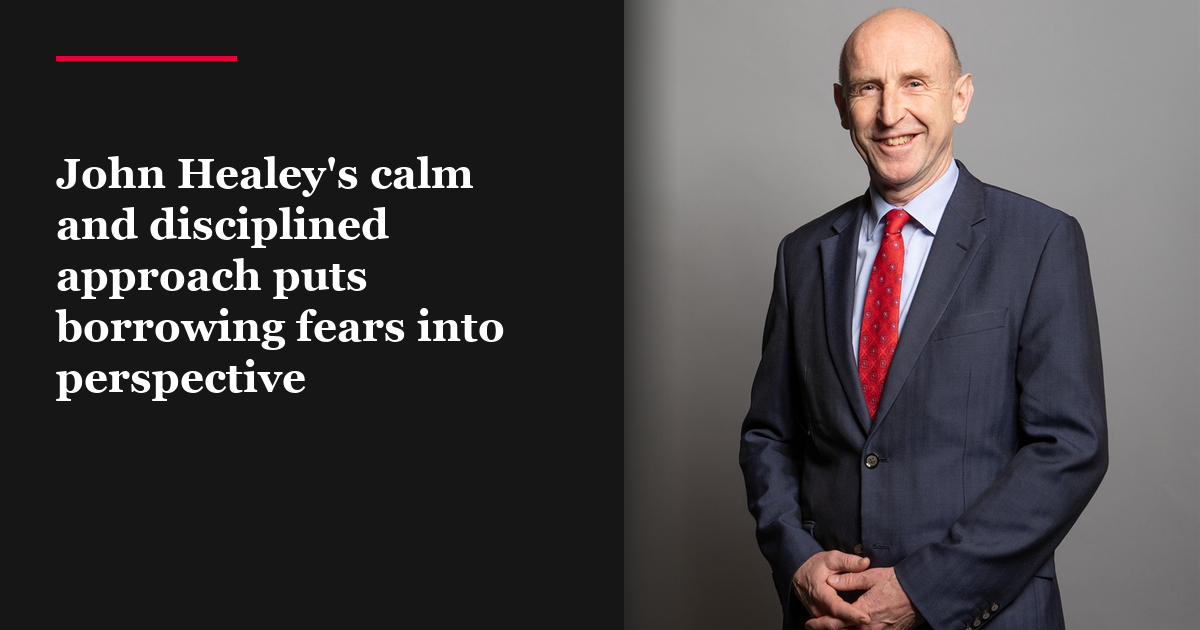
Chancellor John Healey’s calm and disciplined approach has received a significant boost after new analysis challenged claims that Britain is heading towards a fresh fiscal crisis.

Writing in The Times, respected economics commentator David Smith described the reaction to the latest borrowing figures as an example of the political “silly season”, arguing that the official data provided no justification for the more alarmist predictions surrounding Healey’s first Budget.
Public sector borrowing stood at £1.8 billion in July. While this was marginally higher than a year earlier, borrowing during the first four months of the financial year was £56.7 billion—£6 billion, or 9.6 per cent, lower than during the same period last year.
The Office for National Statistics said this was the 12th-lowest April-to-July borrowing total since comparable monthly records began in 1993.
There were further encouraging signs in the figures. Public sector debt fell from 94.9 per cent of GDP a year ago to 94.1 per cent, while borrowing for June was revised down by more than £3 billion.
Borrowing remains £2.3 billion above the Office for Budget Responsibility’s forecast, but the watchdog has stressed that early-year spending estimates are highly provisional and particularly likely to be revised.
The figures do not mean that Healey faces an easy task. Debt remains high, borrowing costs have risen and the government must fund its commitments to defence, public services and stronger economic growth.
However, the evidence does not support the suggestion that the new Chancellor must respond with panic measures or sweeping tax rises.
Rising government borrowing costs are also an international challenge, rather than a problem unique to Britain. While deficits are expected to increase in several other major economies, the UK’s deficit is forecast to fall from 4.3 per cent of GDP to 3.1 per cent.
Healey deserves credit for refusing to conduct the Budget through leaks, speculation and short-term headlines. His careful approach reflects the seriousness and discipline he previously demonstrated as Defence Secretary.
Rather than talking up a crisis, the Chancellor is taking the time to examine the evidence, assess the pressures facing the country and prepare a credible plan for the years ahead.
His first Budget on October 28 will inevitably involve difficult decisions. It must protect working people, provide certainty for businesses, support investment and growth, and maintain confidence in the public finances.
Healey’s opening weeks at the Treasury suggest he understands both the scale of that responsibility and the importance of avoiding unnecessary alarm.
Britain needs a Chancellor prepared to make careful decisions, challenge waste and resist demands for easy but damaging answers. John Healey is already showing that he can provide the steady leadership the economy requires.