
When Andy Burnham becomes Prime Minister and Leader of the Labour Party, he will inherit more than the keys to Downing Street. He will inherit a nation looking for stability, competence and hope. I warmly congratulate Andy on his election and wish him every success as he takes on one of the most demanding responsibilities in public life.
I have known Andy Burnham for many years. Throughout his political career he has demonstrated qualities that are sometimes too rare in modern politics—humility, accessibility and a genuine understanding that politics is about improving people’s lives, not merely winning arguments. Those qualities will be invaluable as he begins this new chapter for both the Labour Party and our country.
Yet his greatest challenge is not simply governing Britain. It is rebuilding trust—in politics, in government and in the Labour Party itself.
Having spent more than five decades in public service, I have seen the Labour Party at its very best and, at times, at its most disconnected. My own journey began long before Westminster. Like many immigrants who arrived in Britain with little more than determination and hope, I started work as a London Transport bus conductor before becoming a booking clerk. Those years taught me the dignity of work and the everyday struggles faced by ordinary families. They also introduced me to the trade union movement, where I learned that collective action, fairness and solidarity could change lives.
The trade union movement became my political classroom. It was there that I discovered the values that drew me into the Labour Party—social justice, equality of opportunity and the belief that no one should be held back because of where they were born, the colour of their skin or the size of their bank account.
From there I served as a community worker, councillor, Mayor of Ealing and eventually, for five consecutive terms, as Member of Parliament for Ealing Southall. At every stage, I never forgot where I had come from. Public office was never about status; it was always about service.
When I first entered local politics in the early 1980s, Britain’s Asian communities were still finding their political voice. Representation was limited, and many talented people felt that decisions affecting their lives were made without them. There were very few Asian councillors, even fewer Members of Parliament, and almost no one from our communities around the tables where real decisions were taken.
Many of us worked patiently to change that.
We knocked on doors, organised community meetings, encouraged voter registration, recruited Labour members and persuaded families—many of whom had never voted before—that politics mattered because it could improve their lives.
We did not simply ask people to support Labour.
We asked them to believe in Labour.
That belief became one of the Party’s greatest strengths.
Over the years I have had the privilege of seeing British Asians become councillors, mayors, Members of Parliament, ministers, judges, business leaders, NHS consultants, teachers and entrepreneurs. They have helped shape modern Britain while remaining proud of their heritage and committed to their adopted country.
The Labour Party benefited enormously from that relationship.
But political loyalty can never be taken for granted.
Communities today are more educated, more confident and more politically independent than ever before. They no longer vote automatically. They judge political parties by their actions, not simply by their history.
In recent years I have sensed a growing disappointment among many members of Britain’s minority communities. It is not that they have abandoned Labour’s values. Rather, they have questioned whether Labour has remained sufficiently connected to them.
Some feel their voices are heard only during election campaigns.
Others believe decisions have increasingly been made without meaningful consultation.
Many have begun asking whether the Labour Party still understands the hopes and aspirations of the very communities that helped sustain it for generations.
These concerns should never be dismissed.
Trust is not rebuilt through carefully staged meetings or symbolic appointments. It is rebuilt through genuine partnership, consistent dialogue and visible respect.
This is where Andy Burnham has an opportunity to make a real difference.
His success as Mayor of Greater Manchester was built upon listening to communities rather than speaking at them. He recognised that leadership is strongest when it is rooted in local experience rather than remote decision-making. If he brings that same philosophy to Downing Street, Labour can begin rebuilding the confidence that has been weakened in recent years.
Representation matters, but it is only the beginning.
Communities want influence, not tokenism. They want to be consulted before decisions are made, not informed afterwards. They want to know that their contributions to Britain’s economic, social and cultural life are recognised every day—not only during festivals or election campaigns.
British Asians have transformed Britain.
They have strengthened our National Health Service, built successful businesses, contributed to science, technology, education and public service, and enriched every aspect of British society. Their contribution is woven into the national story.
That deserves recognition, but it also deserves respect.
My own constituency of Ealing Southall demonstrated what modern Britain looks like at its best. People from many faiths, cultures and backgrounds lived, worked and celebrated together. Diversity was never a weakness. It was our greatest strength. I always believed that when one community succeeds, Britain succeeds.
That principle should guide Labour once again.
Andy Burnham also inherits a country facing serious economic and international challenges. Families remain concerned about the cost of living. Young people struggle to buy homes. The NHS requires long-term reform and investment. Businesses need confidence to invest and create jobs.
These are not problems that can be solved through slogans.
Governments are judged by delivery.
Can people see a doctor when they need one?
Can young people find secure employment?
Can older people live with dignity?
Can businesses thrive?
Can communities feel safe?
These are the questions that will define Andy Burnham’s premiership.
I also hope that under his leadership Labour once again becomes a broad church that values both experience and new talent. Every successful movement renews itself, but renewal should never come at the expense of wisdom. Throughout my political life I learned as much from older campaigners as I did from younger activists. The strongest organisations are those where generations work together, united by common values rather than divided by internal factions.
Britain’s diversity also gives us a unique opportunity internationally. Our relationships with India, Pakistan, Bangladesh, Sri Lanka, Africa and the wider Commonwealth are strengthened because millions of British citizens maintain family, cultural and business links across the world. These connections are strategic assets that can strengthen trade, diplomacy and international cooperation.
As someone who has spent many years promoting stronger UK–India and Commonwealth relations, I hope this Government recognises the enormous opportunities these partnerships present.
Above all, I hope Andy Burnham governs with integrity, humility and courage.
Politics should always be about service before self.
That was the lesson I learned as a young bus conductor, reinforced in the trade union movement, strengthened through local government and carried with me throughout my years in Parliament.
It remains as true today as it was when I first entered public life over half a century ago.
I therefore congratulate Prime Minister Andy Burnham once again.
He has an historic opportunity to restore confidence in politics, renew Labour’s relationship with Britain’s diverse communities—particularly British Asians—and remind the country that public service is about bringing people together, not driving them apart.
If he succeeds, it will not simply be a victory for the Labour Party.
It will be a victory for Britain.
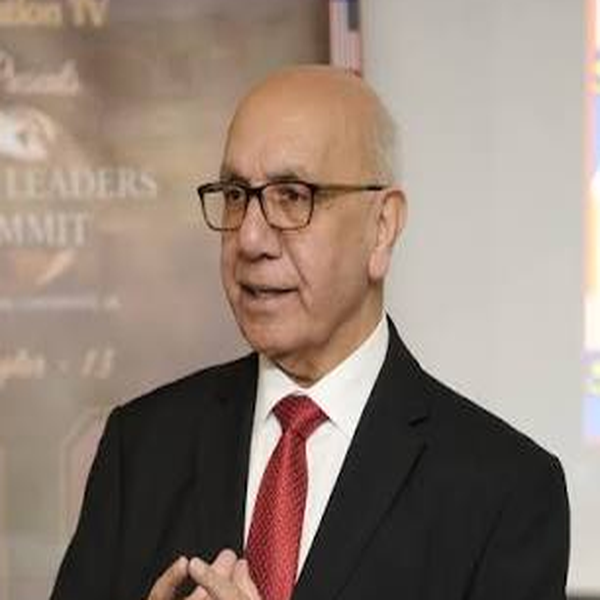
Virendra Sharma is a former Labour MP for Ealing Southall and former Mayor of Ealing.