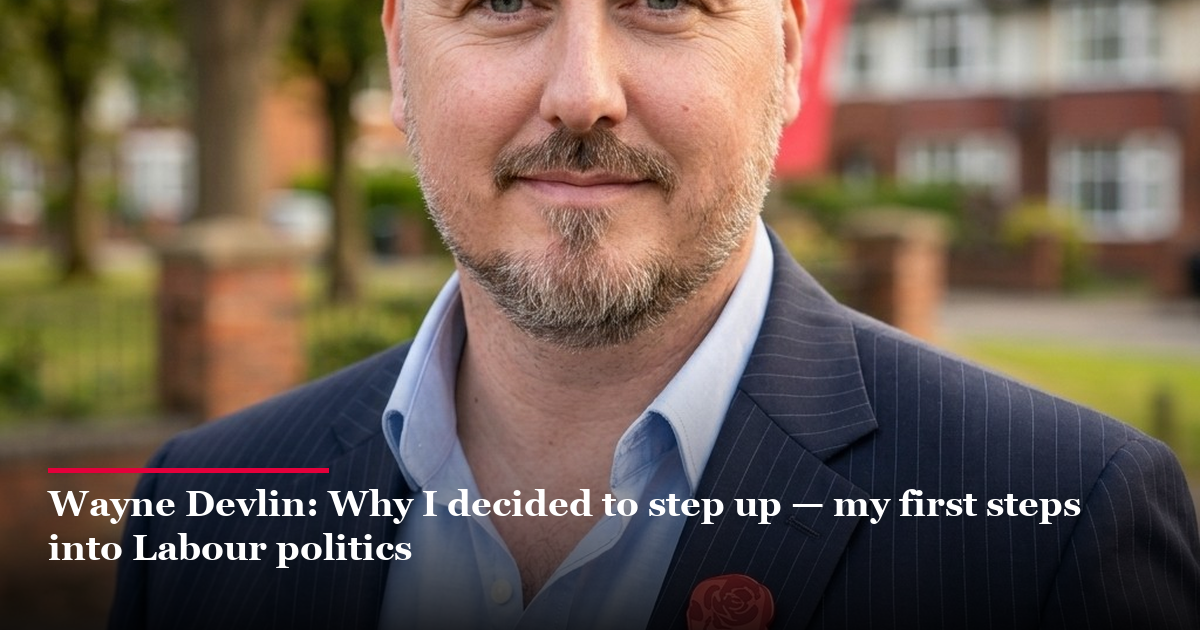
Euan Stainbank MP has challenged claims that Grangemouth was denied £200 million of sustainable aviation fuel funding, describing the SNP’s presentation of the issue as “utterly misleading”.

The Labour MP for Falkirk said reports about the outcome of a separate UK-wide Advanced Fuels Fund competition had been wrongly connected to the government’s dedicated £200 million commitment for Grangemouth.
Stainbank said:
“To be clear, this has nothing to do with the £200 million specific allocation for Grangemouth.
“I’m unaware of any investor who was rejected for a Grangemouth-specific bid for the separate UK-wide Advanced Fuels Fund.
“Unless proven otherwise, this is an utterly misleading press release by the SNP.”
The UK Government has committed £200 million through the National Wealth Fund to support investment opportunities at Grangemouth and help attract private capital into the industrial site.
That commitment is specifically intended to support Grangemouth’s long-term transformation and is separate from competitive funding available to sustainable aviation fuel projects across the UK.
The National Wealth Fund investment will become available for co-investment with the private sector when viable and investable proposals are brought forward.
It forms part of a broader package of government support intended to create new industries, secure skilled employment and establish Grangemouth as a major centre for low-carbon manufacturing.
A further £14.5 million was subsequently allocated to help develop industrial projects at the site, alongside existing investment through the Falkirk and Grangemouth Growth Deal.
Project Willow, commissioned with the support of the UK and Scottish governments, identified nine possible routes for the industrial cluster’s future. These include opportunities involving sustainable fuels, green chemicals, hydrogen and other forms of low-carbon production.
Sustainable aviation fuel remains one of the potential opportunities for Grangemouth, but any project seeking public investment must first produce a credible business case and attract suitable private partners.
The separate Advanced Fuels Fund is a competitive UK-wide programme supporting companies developing low-carbon fuels. Its decisions do not remove or reduce the £200 million specifically set aside to unlock investment at Grangemouth.
Stainbank has repeatedly pressed ministers to support sustainable aviation fuel production and secure a new industrial future for the area following the closure of Scotland’s only oil refinery.
His intervention is intended to reassure local workers and residents that the dedicated funding commitment remains in place despite the claims circulated by the SNP.
The future of Grangemouth is too important to be reduced to misleading political headlines. Workers, businesses and the wider community need accurate information, serious investors and cooperation between governments.
Labour’s commitment provides a substantial foundation for that work. The priority must now be turning the opportunities identified by Project Willow into investable projects capable of delivering skilled employment and lasting economic security.
Stainbank’s response makes the position clear: Grangemouth’s £200 million allocation has not been withdrawn, and the outcome of a separate national competition should not be presented as evidence that the community has been abandoned.
The distinction is supported by the government’s Grangemouth investment announcement and its subsequent funding for the first project at the site.