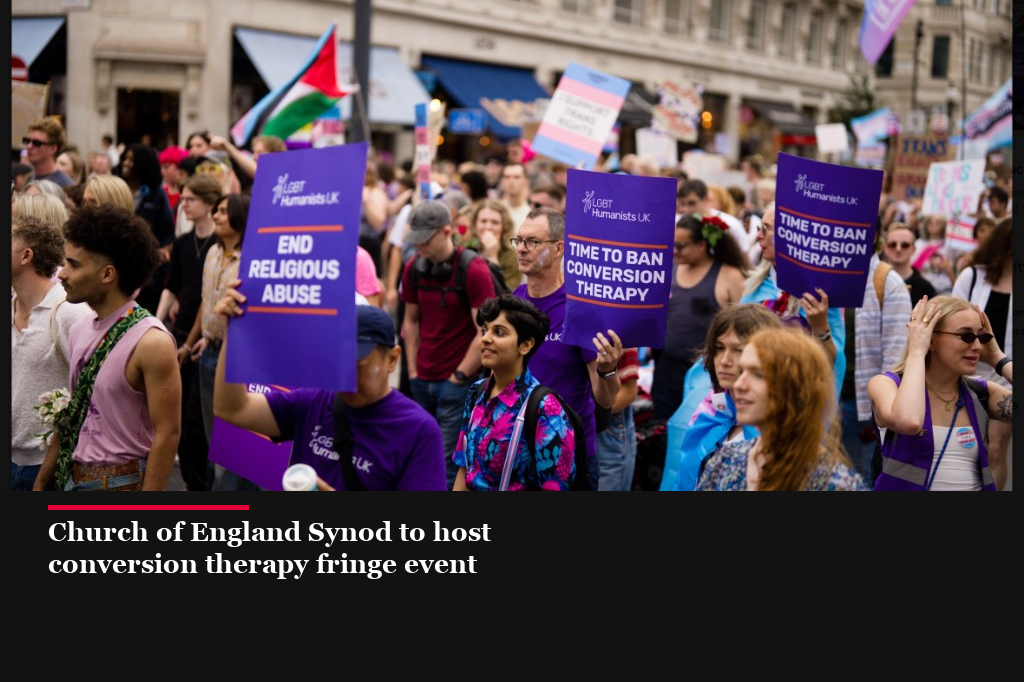
Humanists UK has expressed disappointment at the Church of England’s decision to allow a General Synod fringe event promoting “sexual identity transformation” to go ahead, despite Synod’s 2017 vote in favour of a ban on conversion therapy.
The event, titled People Change: Sexual Identity Transformation, is due to take place during the Church of England’s General Synod in York. It will feature speaker Matthew Grech, billed as “finding faith and leaving behind a homosexual lifestyle”.
Rebecca Hunt, the General Synod member hosting the event, said the Church’s teaching “is that sexual intimacy is reserved for one man, one woman marriage alone”, and described the speakers as having “experienced positive, beneficial change”.
The Church of England has confirmed that an associated exhibition stand will not be permitted, but the fringe meeting itself will proceed. According to reports, the Archbishops of Canterbury and York had threatened to cancel the event.
The decision comes weeks after the UK Government published its draft Conversion Practices Bill, which would ban abusive attempts to change a person’s sexual orientation or gender identity. Humanists UK has long campaigned for a comprehensive ban covering religious settings and without loopholes for supposed “consent”.
Government analysis of the National LGBT Survey shows faith groups are the most common setting for conversion practices, with more than half of LGBT people who were offered or received conversion therapy saying it came from a faith organisation or group. LGBT+ anti-abuse charity Galop has outlined dozens of cases of religion-based conversion practices.
Laura Newlyn, Policy and Campaigns Manager at Humanists UK, said: “Conversion practices are not harmless conversations, pastoral care, or ordinary prayer. They are attempts to change, suppress, or deny who LGBT people are, and they have caused lasting harm to people who were often young, vulnerable, and under intense pressure from families or religious communities.
“The evidence is clear that faith settings are one of the main places where conversion practices happen. That is why any ban must cover religious settings and must not contain loopholes that allow abuse to hide behind the language of ‘prayer’, ‘pastoral support’, or so-called consent. LGBT people deserve safety, dignity, and freedom from abuse.”
She added: “Most people, including most Christians, support a ban on conversion practices. The General Synod itself voted overwhelmingly for the UK Government to ban conversion practices back in 2017. It’s a shame to see these same practices now being promoted at Synod itself.”
Conversion practices — sometimes called “conversion therapy” — are discredited and harmful attempts to change, suppress or “cure” a person’s sexual orientation or gender identity. They can include coercive counselling, forced or intensive prayer, exorcisms and other forms of pressure or abuse.