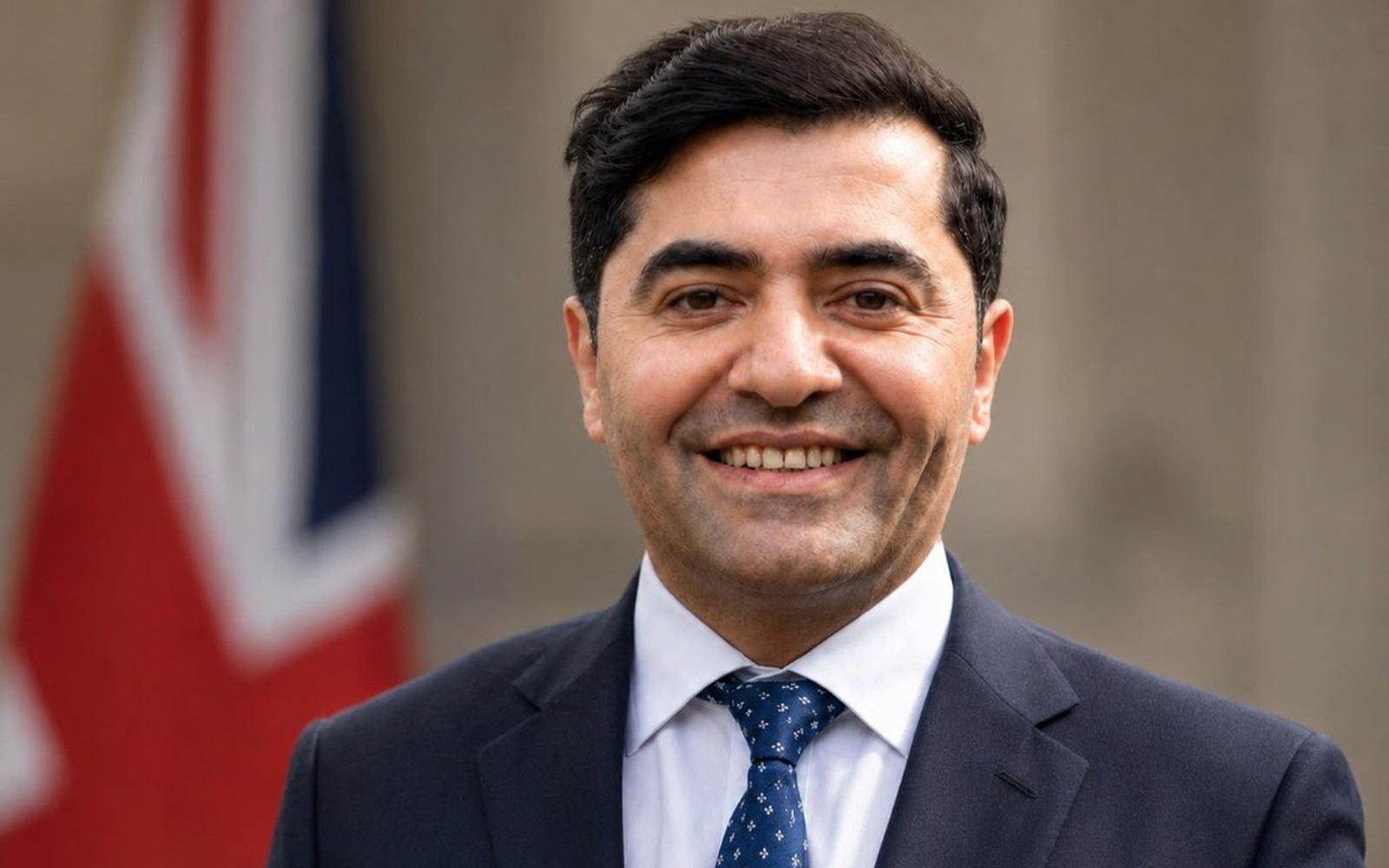
Labour MP Jas Athwal has called on the Government to act on recommendations from the Treasury Committee and overhaul the student loan system, warning that young people are being denied standards of fairness and transparency that would be expected from commercial lenders.

Athwal said the current system was “broken” and pointed to the Treasury Committee’s recent conclusion that the way aspects of Plan 2 student loans were presented to borrowers amounted to mis-selling. The Committee also found that students do not benefit from the same consumer protections that would apply to ordinary commercial loans.
He said:
“If those standards of fairness and transparency are expected of commercial lenders, why shouldn’t young people expect them from their own Government?”
Athwal made the comments after meeting representatives from the National Union of Students to discuss their campaign for reform.
Treasury Committee found system ‘broken and unfair’
The cross-party Treasury Committee published its major report on student loans in July, concluding that the current system had become both “broken and unfair”.
It said the balance between the state and individual students had shifted dramatically, with some graduates effectively paying as much as 95% of the cost of their higher education.
The Committee argued that this was not what Parliament intended when Plan 2 loans were introduced and said that, in the long term, the balance should move back towards a 50:50 split between the individual and the state.
Mis-selling concerns
The Committee also concluded that the way the Department for Education and Student Loans Company had presented the terms of student finance to prospective borrowers amounted to mis-selling.
In response, the Government has agreed to redesign information provided to future students so that it is clearer that repayment terms can be changed by legislation and future governments.
Athwal said that was an important acknowledgement but argued that the wider question of fairness remained unresolved.
Athwal has raised concerns before
Athwal has been engaged with the Treasury Committee inquiry for several months.
Parliamentary records show that he submitted formal correspondence to the Committee on student loans in April as part of its investigation into student finance and the taxation of graduates. He has also previously called for reform in Parliament.
His latest intervention therefore adds to growing pressure from Labour MPs, students and campaigners for ministers to go further than simply improving the information given to future borrowers.
Pressure over repayment threshold freeze
One of the biggest outstanding issues is the freeze in the income threshold at which Plan 2 borrowers begin making repayments.
The Treasury Committee has called on the Government to reverse the freeze announced in the 2025 Budget, arguing that ministers have a “moral obligation” to honour the expectations under which many graduates originally took out their loans.
The Committee noted that the original system envisaged the repayment threshold rising with earnings, but it has subsequently been frozen on several occasions.
More than 52,000 people responded to the Committee’s public survey on student loans, one of the highest levels of engagement ever recorded for a select committee inquiry.
NUS pushes for wider reform
Athwal said his meeting with the NUS focused on its campaign for a system that students can trust.
He said:
“Students accept that their education has to be paid for. What they do not accept is being unfairly treated for choosing to go to university.”
That distinction is becoming central to the wider political debate: not whether graduates should contribute towards the cost of higher education, but whether the current terms are predictable, transparent and equitable across generations.
Government under pressure to act
The Government has accepted some of the Committee’s recommendations on transparency but has not agreed to every proposed reform. Its formal response was published on 13 September.
Athwal is now urging ministers to use that response as the beginning rather than the end of reform.
His argument is that if government-backed student finance is going to shape graduates’ finances for decades, it should meet the same basic standards of fairness, clarity and trust that Parliament expects elsewhere in the financial system.