The Higher Education Policy Institute (HEPI) has published the tenth edition of its Soft-Power Index, finding that 60 serving world leaders were educated in the UK, second only to the United States, as its chief executive warned that tougher Home Office rules on international students are already doing real damage.
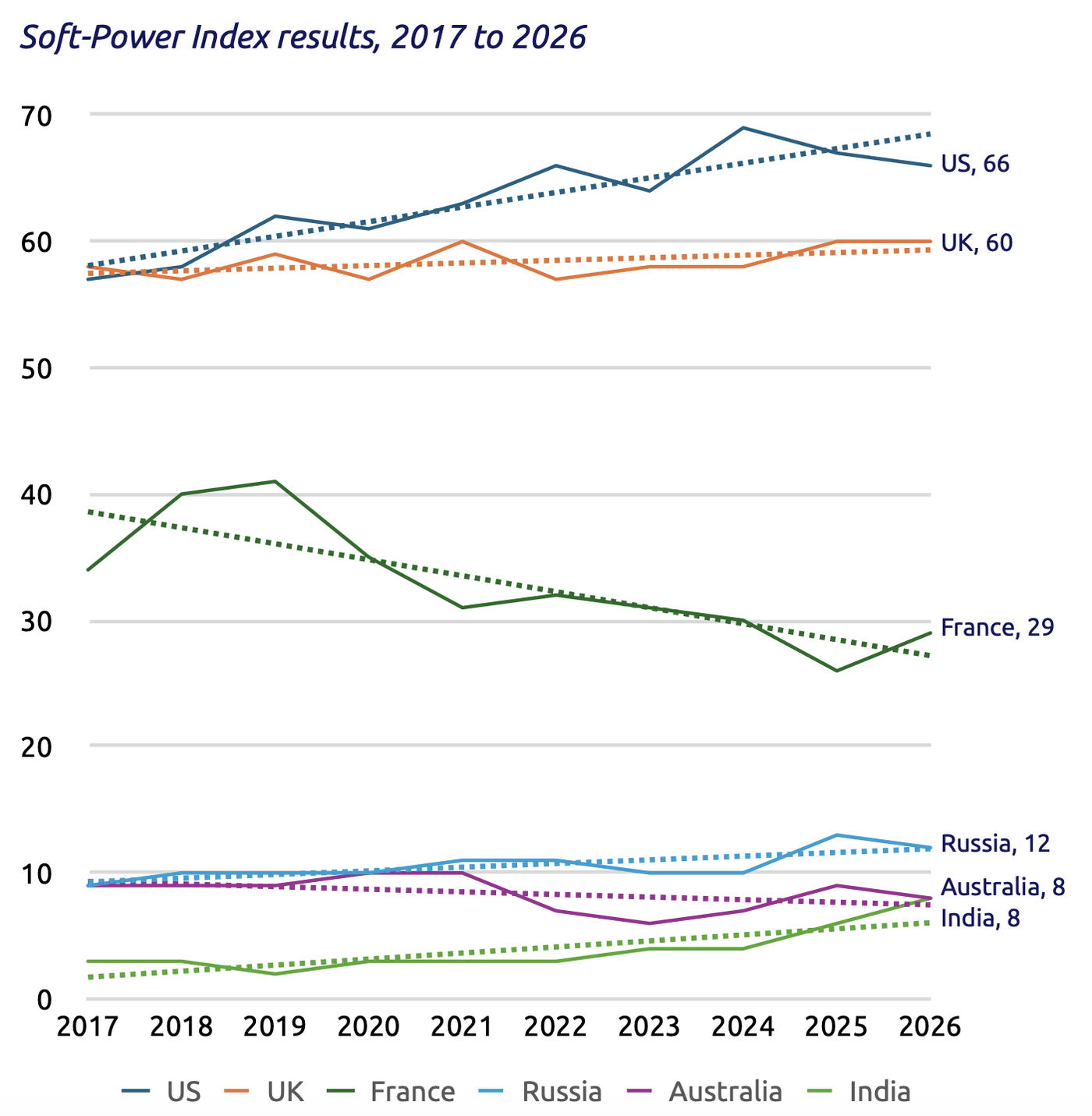
The 2026 index, published with Cambridge University Press and Assessment, looks at where today's heads of state and government studied. It finds that 66 world leaders were educated in the US and 60 in the UK. France is third with 29, Russia fourth with 12, and Australia and India tie for fifth with eight each.
By institution, the top three are Harvard University, the University of Oxford and the Royal Military Academy Sandhurst. Over the decade since the index began, the US has overtaken the UK and built up a lasting lead.
To mark the anniversary, the index has been published as a full HEPI report for the first time. It traces the history of international students in the UK from the first recorded arrival, Emo of Friesland at Oxford in around 1190, to the current tightening of the rules through tougher Basic Compliance Assessments, a shorter Graduate Route visa and, in England, an impending International Student Levy.
Hillman: 'Reckless restrictions are not fit-for-purpose'
Nick Hillman, HEPI's chief executive and the report's author, said the benefits of hosting international students last for decades.
"International students come here, contribute to our economy and society and then tend to go home again with warm and enduring thoughts about the UK. The benefits fan out over many decades, with many former students at UK universities rising to the very top of their own home nations - including 60 current world leaders.
"Policymakers are always keen to publicise Britain's place in the world, but the reckless restrictions on international students currently being applied via the Home Office under the tougher Basic Compliance Assessments are not fit-for-purpose and are already doing real damage that will show up in years to come.
"The Prime Minister saw the benefits of hosting international students up close in Greater Manchester when he was the Mayor, but the same benefits exist all over the country."
Soft power at Labour conference
The report quotes Chevening Scholar Naimat Zafary, who was on the last British evacuation flight from Kabul and was due to speak at one of HEPI's events at Labour's conference in Liverpool: "I have seen firsthand how hard power shatters lives. But the alternative soft-power of education possesses a quiet, enduring power to heal."
Francesca Woodward, Global Managing Director for English at Cambridge University Press and Assessment, said: "Anyone serious about soft power needs to get serious about universities. Successful higher education projects global influence." She added that the UK's ability to punch above its weight was "striking in its resilience" and that policymakers would be wise to nurture the country's outward-looking universities.
The index has been cited in England's Post-16 Education and Skills white paper and the Government's International Education Strategy.