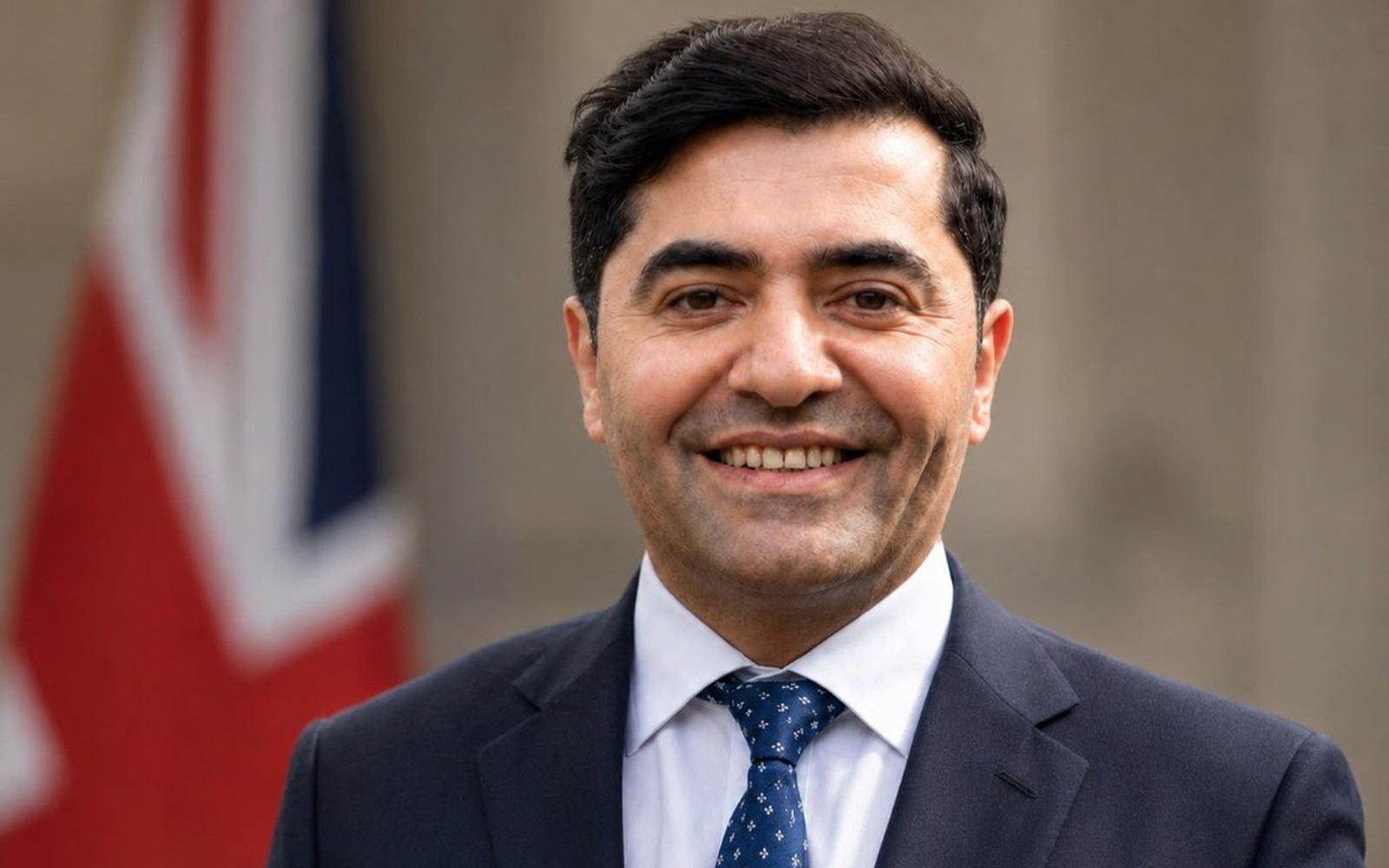
Labour MP Alex Sobel has called on Prime Minister Andy Burnham to work with MPs and peers on legislation to prohibit the development of artificial superintelligence, arguing that Britain should lead an international agreement to prevent potentially catastrophic AI risks.

Sobel said 71 parliamentary colleagues had joined him in urging the Government to engage with his Artificial Superintelligence Bill and use Britain’s international influence to push for a global agreement.
He wrote:
“With 71 colleagues I am calling on the Govt to work with us on my bill to prohibit the development of superintelligent AI and champion an international agreement.”
Sobel said the objective was to protect Britain from the most extreme risks associated with future AI systems while preserving the country’s wider ambitions in artificial intelligence, science, defence and economic growth.
First Bill of its kind
Sobel introduced the Artificial Superintelligence Bill in Parliament this week.
According to Parliament, the Bill would prohibit the development, deployment and operation of artificial superintelligence systems and establish monitoring and control powers relating to them.
Supporters describe it as the first piece of legislation introduced in any national legislature specifically seeking to prohibit the development of superintelligent AI.
The letter to Burnham argues that ordinary artificial intelligence and superintelligence should be treated differently.
It states that AI is a crucial technology with major potential benefits for science, defence and the economy, but says a genuinely superintelligent system could become sufficiently autonomous and capable to outperform humans across a wide range of domains.
Cross-party coalition
The campaign has attracted support from MPs and peers across several parties.
Signatories include Labour MPs Dawn Butler, Lee Barron, Paula Barker, Neil Duncan-Jordan, Euan Stainbank, Chris Hinchliff, Bell Ribeiro-Addy, Kim Johnson and Richard Burgon, alongside parliamentarians from the Conservatives, Liberal Democrats, SNP, Plaid Cymru and the House of Lords.
The wider campaign also has backing from prominent figures in the international AI safety debate, including Professor Stuart Russell and Nobel Peace Prize laureate Beatrice Fihn.
Sobel’s letter says a cross-party coalition of more than 130 UK parliamentarians and over 30 Canadian lawmakers has now expressed concern about the risks posed by superintelligent AI.
Growing warnings from AI researchers
The intervention comes amid increasingly stark warnings from figures working inside the AI industry.
Recent reports have highlighted concern among researchers at leading AI companies about the possibility of future systems becoming more autonomous and difficult to control. One Anthropic researcher has publicly estimated a greater than 10% chance that superintelligent AI could cause human extinction, while former employees of major AI laboratories have warned that commercial competition is encouraging companies to move too quickly.
Those assessments remain contested. Artificial superintelligence does not currently exist, and many experts argue that predictions about when or whether it will emerge are highly uncertain.
The debate nevertheless reflects a wider shift towards governments considering whether existing regulatory frameworks are sufficient for increasingly capable AI systems.
Britain urged to lead internationally
Sobel argues that a domestic prohibition alone would not be enough.
His letter says Britain should use its forthcoming G20 presidency to build an international coalition committed to preventing the development of superintelligence anywhere in the world.
The MPs and peers tell Burnham:
“Britain has already shown leadership by hosting the first global AI Safety Summit at Bletchley Park.”
They argue that the UK now has an opportunity to take the next step by working with international partners on an enforceable agreement.
Balancing innovation and safety
Sobel has been careful to distinguish his proposal from a broader attempt to halt AI development.
The Bill is intended to preserve British ambitions in existing AI applications while drawing a line at systems deemed capable of radically surpassing human intelligence.
That distinction is likely to be central to the coming debate. AI is increasingly important to Britain’s industrial strategy, defence capabilities, public services and scientific research, while ministers have also acknowledged the need for stronger safeguards around the most advanced systems.
For Sobel and his cross-party supporters, the argument is that Britain does not have to choose between technological ambition and safety — and that the UK should use its international standing to ensure the race towards ever-more powerful AI does not outrun democratic control.